General Dentistry
Root Canal Therapy in Newport Beach, CA
Save Your Natural Tooth with Gentle, Effective Treatment
Tooth pain, sensitivity or swelling can mean a tooth is infected, and a root canal may be the way to save it. Dr. Omid Haroonian uses modern techniques and advanced technology to make root canal therapy comfortable, and he is highly experienced in saving infected or damaged teeth, often in just one visit.
What Is a Root Canal?
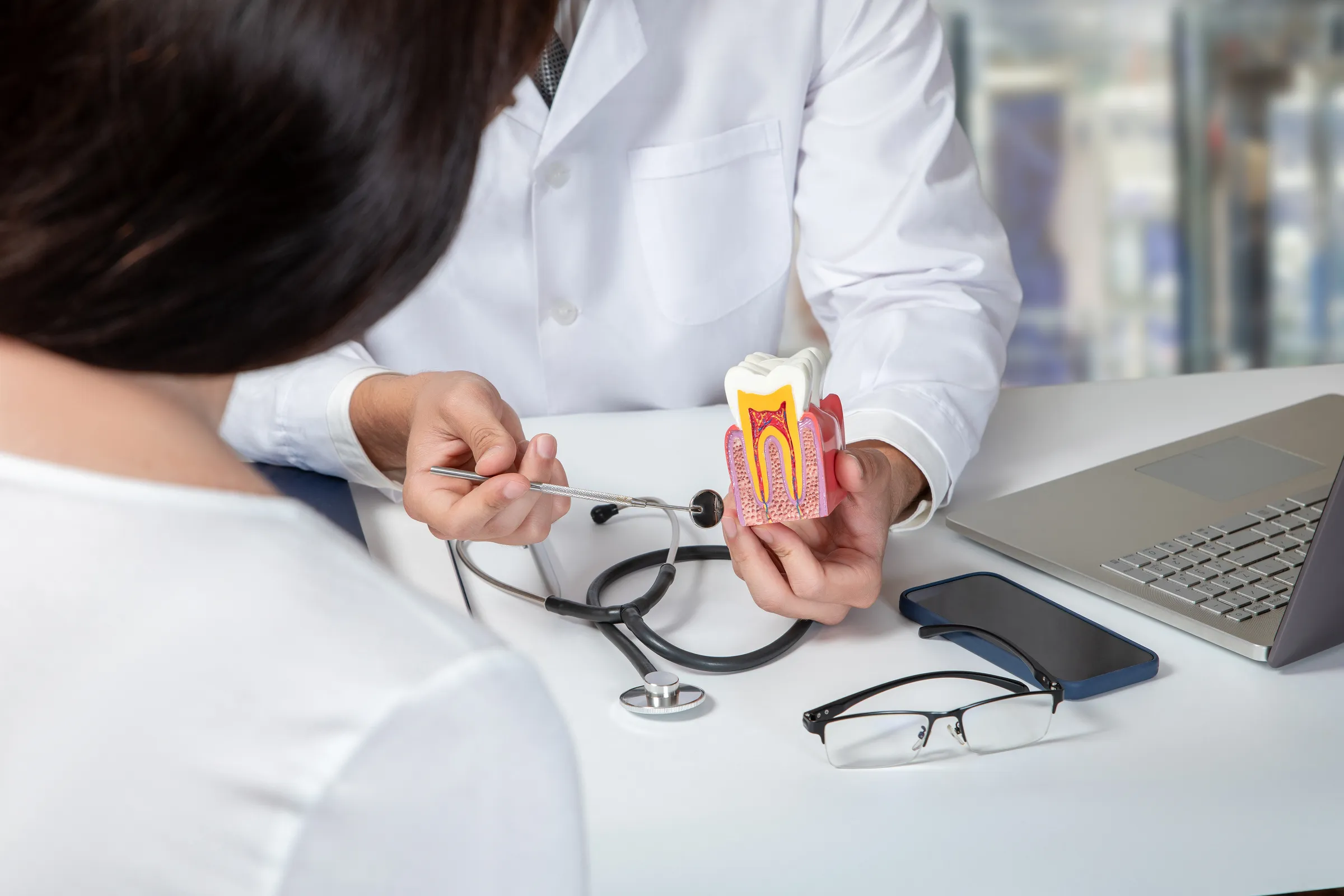
A root canal is a restorative procedure that removes infected or inflamed tissue from inside a tooth’s root canal system. Inside every tooth is soft tissue called the pulp, and when deep decay, a crack or an injury lets bacteria reach it, the pulp can become infected and painful. During treatment, the infected pulp is removed, the inside of the tooth is cleaned and disinfected, and the canals are filled and sealed to prevent further problems. Most teeth treated with a root canal are then restored with a custom crown for strength and function. Prompt treatment matters, because an infection left alone can spread into the surrounding bone.
Signs You Might Need a Root Canal
- Persistent toothache. Ongoing or throbbing pain in a tooth.
- Lingering sensitivity. Sensitivity to hot or cold that lasts after the source is removed.
- Swelling or tenderness. Puffiness or soreness near the gum line.
- A darkening tooth. Discoloration of a single tooth.
- A bump on the gums. A pimple-like bump can signal an abscess.
- Pain when you bite. Discomfort when chewing or biting down.
Early treatment prevents further damage and can often save your natural tooth.
Our Root Canal Process
- Digital X-Rays & Numbing We image the root canal and surrounding tissue, then fully numb the area so you feel no pain during the procedure.
- Pulp Removal & Disinfection The infected pulp is gently removed and the inside of the tooth is thoroughly cleaned.
- Sealing the Canal We fill the space with a biocompatible material to prevent reinfection.
- Crown Placement A custom crown is placed to protect the tooth and restore full function.
What Causes a Tooth Infection?
- Deep Decay A cavity that reaches the nerve lets bacteria into the pulp.
- Cracked or Broken Teeth A crack or break can open a path to the inside of the tooth.
- Repeated Dental Procedures Repeated work on the same tooth can inflame the pulp.
- Trauma or Injury A blow to a tooth can damage the pulp, even without visible damage.
Technology That Makes Root Canals Easier
- Electronic apex locator for precise measurement of root canal depth
- Digital X-rays for accurate, low-radiation diagnostics
- Microscopic tools for precise cleaning and shaping
- Rotary instruments for faster, smoother treatment
- Oral and IV sedation for a stress-free experience
If you feel anxious about a root canal, you are not alone, and sedation can help you relax throughout your visit.
Will I Need a Crown After a Root Canal?
In most cases, yes, especially for molars and other teeth used for chewing. A crown strengthens the treated tooth and restores its appearance and durability. Same-day crowns are available in select cases; see our dental technology to learn how they are made.
Don’t live with tooth pain. Book online or call (949) 646-2481 to save your natural tooth.

The short answer
Root canal therapy is a procedure that removes infected or inflamed pulp from inside a tooth so the natural tooth can be saved. After the area is numbed, the pulp is removed, the inside of the tooth is cleaned and disinfected, and the canals are filled and sealed with a biocompatible material. It is recommended when decay, a crack or an injury reaches the pulp, and most treated teeth are then protected with a custom crown.
Frequently Asked Questions About Root Canal Therapy
- Is a root canal painful?
No, a modern root canal is virtually pain-free. We fully numb the area before treatment, and sedation is available if you are anxious. Most patients feel relief, not discomfort, after treatment. The procedure removes the infection that was causing the pain.
- How long does a root canal take?
Most root canal procedures take 60–90 minutes. Some cases need a second visit, especially if the infection is advanced. Dr. Haroonian will tell you what to expect after your exam and X-rays. Many patients feel relief in just one visit.
- Can a root canal fail?
It is rare, but retreatment may be needed if the tooth becomes reinfected. We use advanced techniques to minimize this risk. Sealing the canal with a biocompatible material and placing a crown both help protect the tooth. Regular checkups let us keep an eye on it over time.
- Do I need a crown after a root canal?
Usually, yes, a crown is recommended after a root canal. It strengthens and protects the tooth, especially back teeth that bear heavy biting forces. A crown also restores the tooth’s appearance. Same-day crowns are available in select cases.
- How do I know if I need a root canal or a filling?
If decay or damage has reached the pulp inside the tooth, a root canal is necessary rather than a filling. We determine this with an exam and X-rays. Signs such as lingering sensitivity, swelling or a bump on the gums point toward an infection. Dr. Haroonian will explain what he finds before recommending treatment.
- What happens if I don’t get a root canal?
An untreated tooth infection can spread to your jawbone or bloodstream. It may result in losing the tooth or in serious health complications. Bacteria from infected pulp can move into the surrounding bone. That is why prompt treatment is essential.
- Is it better to extract the tooth instead?
Saving your natural tooth is usually the best option. Replacing an extracted tooth with an implant or bridge is more invasive and more expensive. A root canal followed by a crown lets you keep the tooth you have. We will review your options with you before treatment.
- Can I drive myself home after the procedure?
Yes, you can usually drive yourself home after a root canal. The exception is IV sedation, in which case someone must drive you home. Let us know if you plan to use sedation so you can arrange a ride. Our team will go over the details when you book.
- How long does recovery take?
You may feel mild soreness for 1–2 days after a root canal. Most patients return to normal activities the next day. The tooth should be protected until its final crown is placed. Call us if anything feels unusual while you heal.
- Will my insurance cover a root canal?
Most dental plans cover root canals partially or fully. Your exact coverage depends on your plan. Our team will help verify your benefits and explain your options. Financing is also available for the remaining cost.

Book a visit
Schedule your visit with Dr. Haroonian


Google reviews

Insurance & financing
Paying for Your Care
We work with most major PPO dental insurance plans and are happy to verify your benefits before your visit.
Financing through CareCredit.